The other day I picked up some fairly decent looking plywood from Home Depot for my daughter’s bunk bed project. I was making the platform that the lower bunk would rest on, which wouldn’t be seen, so I thought I’d just use something cheap (although at $40 per sheet it’s not that cheap).
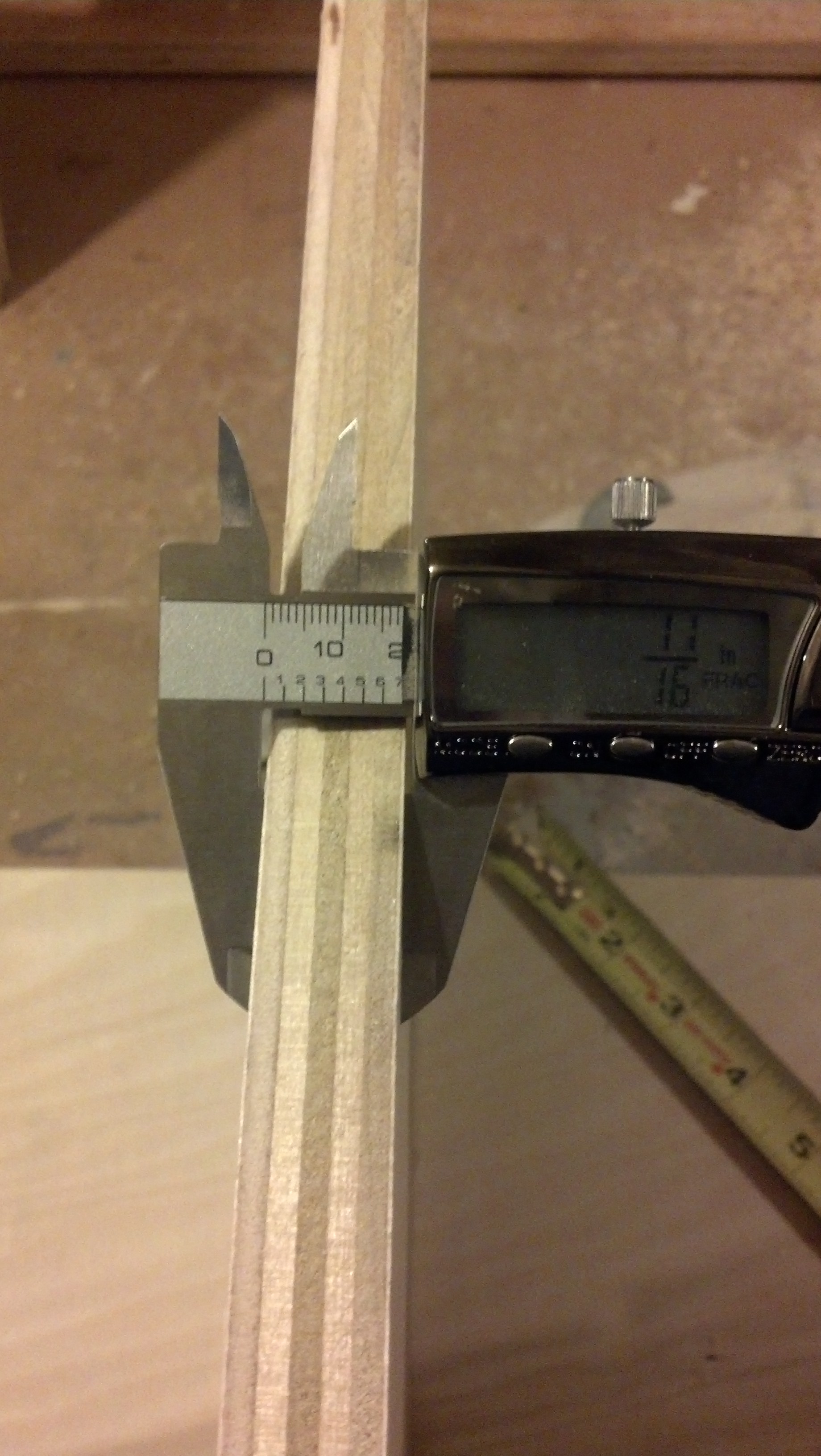 By now most people know that plywood is almost universally undersized: 3/4 inch plywood is really 23/32″ thick. This has become so pervasive that router bits and dado blades now come in 23/32″ widths, and in many lumber stores, they’re actually honest and post their plywood as 23/32″ thick.
Back to my trip. So I purchase a sheet of “blondwood” plywood, labeled 23/32″ x 4′ x 8′ and bring it home. I make a couple cuts and run a 23/32″ rabbet in the end of one of the pieces, and test fit using one of the cutoffs. For some reason, the test piece is really loose so I run a dado in a piece of scrap, and sure enough it’s loose too. After getting really frustrated, I pull out my caliper and check the wood. It’s 11/16″ thick! That’s completely not cool! The moral? Check your plywood before you purchase, or you may get a nasty surprise the way I did. It might be worth buying from a smaller, local lumber supplier too, even though the prices at the box stores are a bit lower. The small premium you pay might be worth it.